Two tracks, ten sessions each, matched to how each age actually learns. Younger students play an AI game, then take it apart and build their own. Older students ship a real app to a real URL. Everything they make lands in the Kiddoer Arcade.

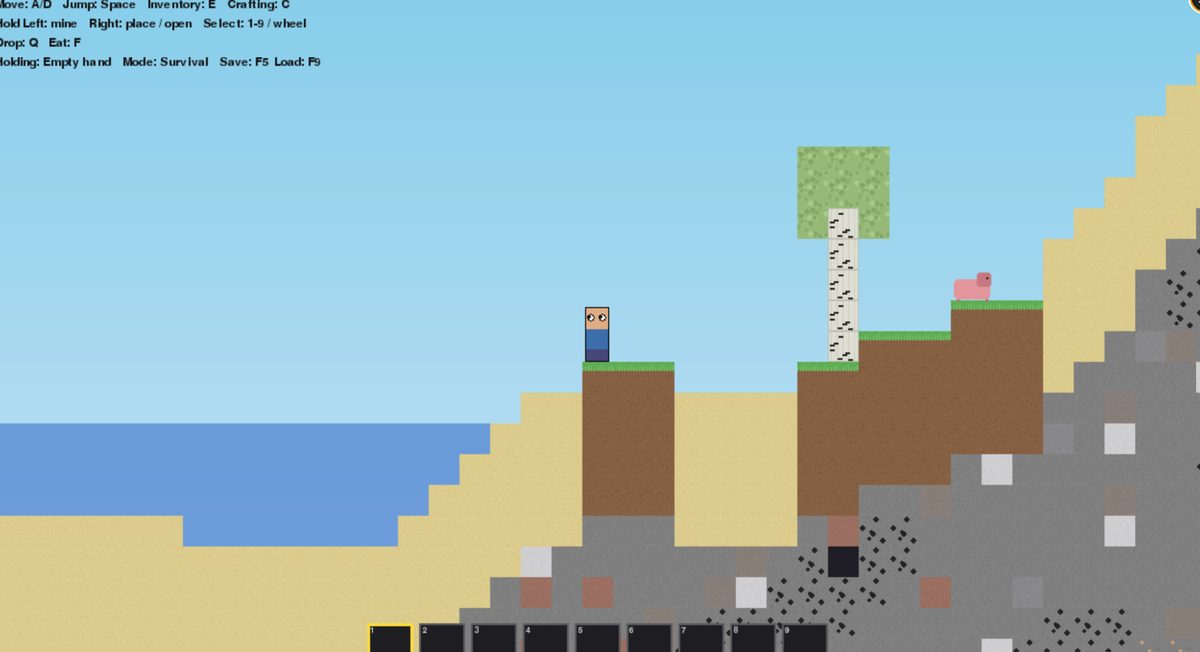
A side-on sandbox world to mine, craft and build in. Dig for ore, smelt it in a furnace, and see how deep you can get before dark.
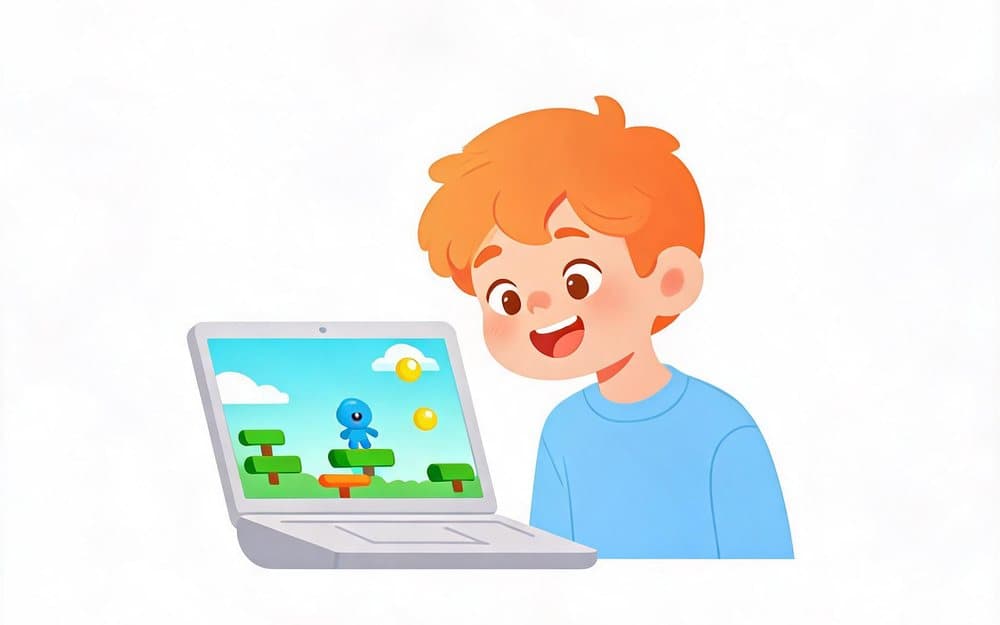
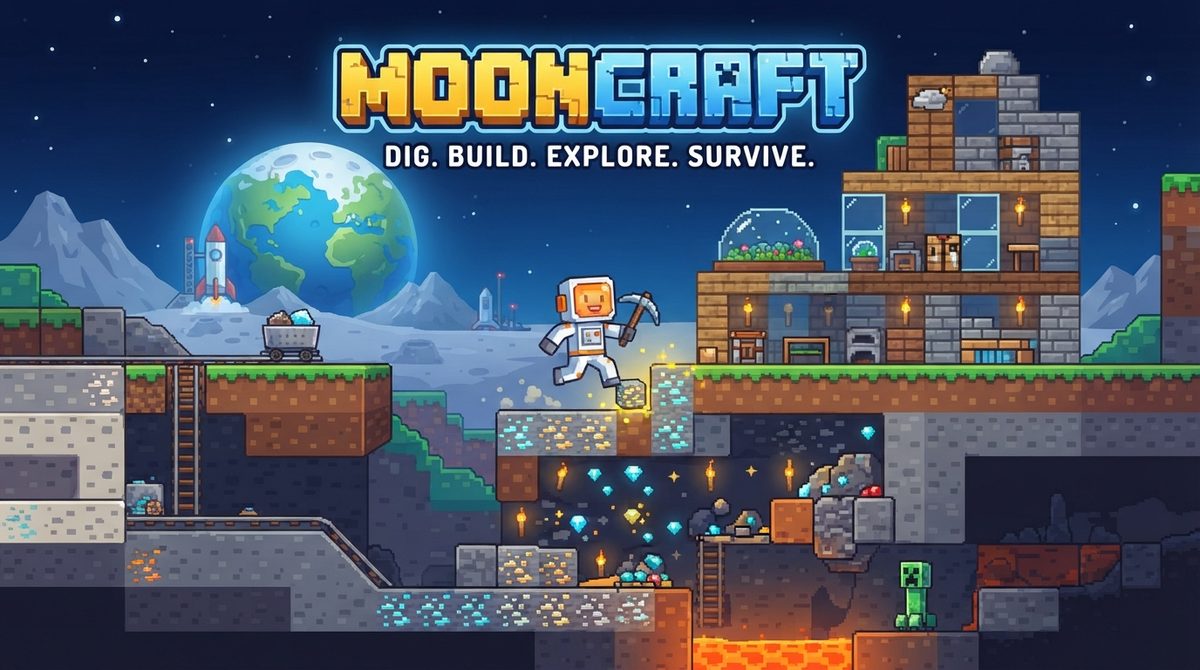
Jasper's second Mooncraft, and a much bigger one. Six worlds to keep, sheep wandering the hills, caves and dungeons under the sand, and TNT for when digging is too slow.

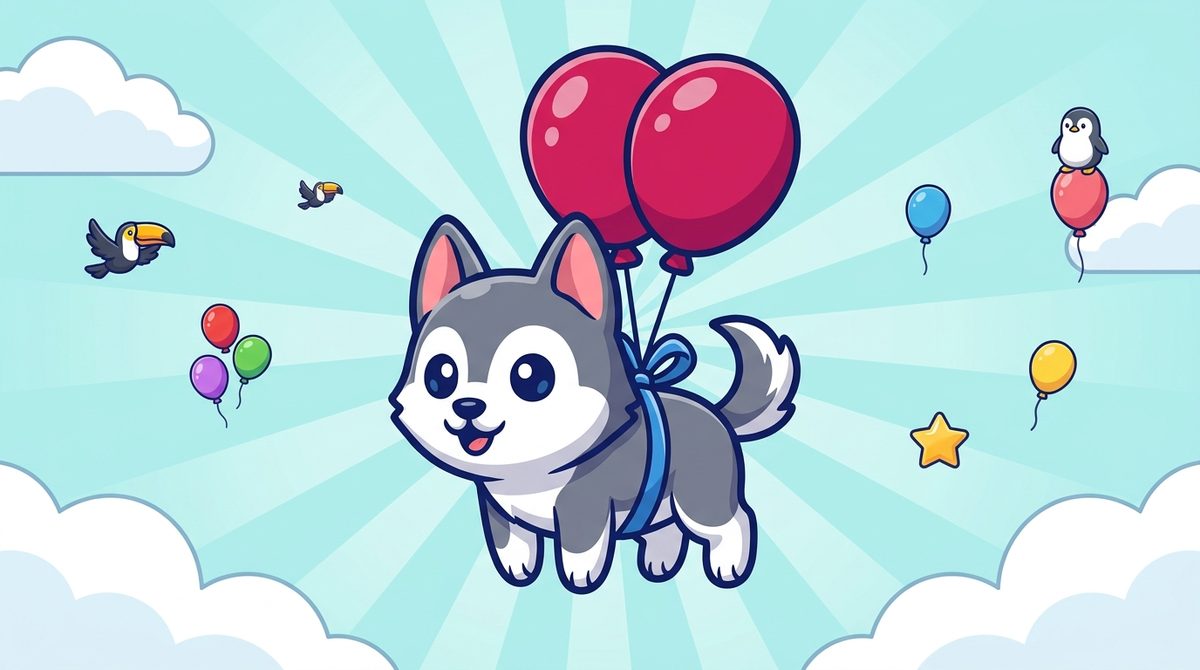
Steer a balloon-lifted husky past everything with a spike on it, and see how far you get before the last balloon pops. Big download — give it a minute to load.
Age decides the track, and the research decides the age. Under 11, kids understand logic best by moving and doing — so the Explorer Track teaches through interactive games. From 11, abstract syntax finally makes sense to them, so the Script Track writes real code.

Play the game and meet your AI character. Then the real question: why did I get that one?

Open the JSON, add your own character, and argue about whether the logic is fair. The class LLM is the design partner.

New theme, new characters, blank file. Same game mechanic, entirely their game.

Demos of wild student projects first, instruction second. Then open the hood, break things on purpose, and read the logs.

Pick a direction — AI chatbot, emotional avatar, 3D world, or AI creative tool — and build it. One commit per class.

Live URL on the projector and a 60-second pitch. Real stakes, real audience.
Every choice here comes from published research on how kids actually learn. Four that matter most:
Three projects per track that kids can share. Building something beats being lectured at — students remember more, and they stay interested.
Papert 1991 · Krajcik & Shin 2014Under 11, kids grasp if-then rules by acting them out rather than reading them. That is why the Explorer Track is built around interactive games.
Wilson 2002 · Lindgren 2013 · Piaget 1972Working with an AI helper made students 55% faster and more confident — but only when they read and changed the code instead of pasting it.
Peng et al. 2023A real link and a real audience beat a test. Kids stay with it because they can see their work change on screen straight away.
Wiggins 1998 · Deci & Ryan 2000Ages 8 to 15, split into two tracks. The Explorer Track is for 8–10 and teaches logic through interactive games. The Script Track is for 11–15 and writes real code. The split is at 11 because that is roughly when abstract syntax becomes readable to most kids.
No. Both tracks start from zero. The Script Track's first sessions are spent opening finished projects, breaking them on purpose and reading the errors — before anyone is asked to write a line.
Ages 8–10 need a laptop or a tablet. Ages 11–15 need a laptop, because they are typing real code and using a browser-based editor. Nothing to install beyond a browser.
Three projects per track. The last one is theirs from a blank file, and it ends up published at a real web address they can send to a friend — not a screenshot, and not a certificate.
Yes. Every finished project goes into the Kiddoer Arcade, free to play in any browser with no download and no account. It is the honest version of a portfolio: you can click a game and judge it yourself.
Ten live sessions in a small group, taught in English or Chinese. The final session is Demo Day, where each student puts their live URL on the projector and pitches it.
Schools, after-school centres and independent tutors run the Kiddoer programme as their own — our curriculum, projects and AI tool behind your name.